01
Safety comes first.
When a child is unsafe, government has a legitimate responsibility to intervene. Protecting children is not optional.
Child welfare + foster care
Children enter foster care in the middle of profound disruption. Child welfare must do more than move a child from one place to another. It must protect safety, preserve dignity, strengthen families when reunification is safe, support foster and kinship caregivers, and move children toward stable, permanent homes.
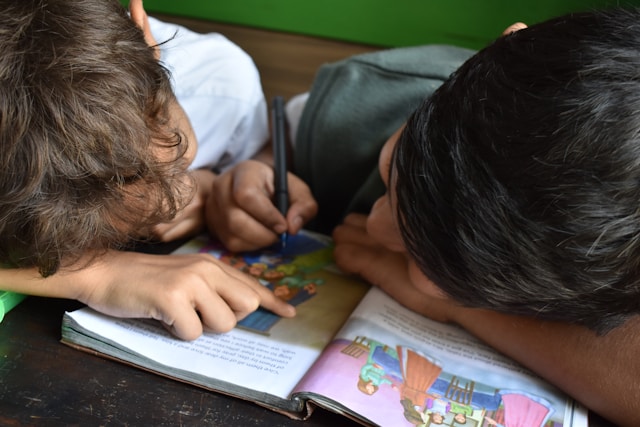
That work depends on more than policy. It requires capable agencies, enough family-based placements, strong community partners, and environments that recognize what a child may be carrying into the room. My work at Lily Pad is one part of that larger system.
The national picture
Federal data show that approximately 329,000 children were in foster care at the end of FY2024. Nearly 171,000 children entered care during the year. Of the 176,730 children who exited, 45 percent reunified with parents or caregivers and 27 percent were adopted. Thirty-nine percent of children in care were placed with relatives or kin.1
Separate federal child maltreatment data identified 532,228 child victims in FY2024, a national victimization rate of 7.2 per 1,000 children.2 These systems touch hundreds of thousands of children and families every year, often at moments marked by fear, uncertainty, loss, and major disruption.
Closer to home
As of May 4, 2026, SCDSS reported 3,402 children and youth in foster care. The agency also says the greatest current need is for foster homes willing to serve older youth and teens ages 10 to 17, sibling groups, and children with complex medical or therapeutic needs.3
Federal FY2024 data for South Carolina recorded 12,442 child maltreatment victims, 2,611 children entering foster care, 2,801 exiting care, and 3,337 children in foster care on September 30, 2024.4
The 2025 federal Child and Family Services Review found South Carolina in substantial conformity with none of seven child and family outcomes and three of seven systemic factors. The review also makes clear that the picture is mixed, not one-dimensional. South Carolina performed better than national performance on some permanency indicators, while reentry to foster care and placement stability were worse than national performance.5
That is not an indictment of the people doing the work. It is a reason to keep improving the system around them.
The federal review found South Carolina statistically better than national performance for permanency within 12 months for children entering care and for children who had already been in care 24 months or more.5
The same review identified placement stability and reentry as weaker than national performance, plus gaps in service availability, staff and provider training, and foster and adoptive parent recruitment and retention.5
Government has a duty to protect children. It cannot replace the family and community they need.
Good child welfare policy should combine decisive protection with family preservation where safe, kinship and family settings where possible, strong support for foster families, measurable accountability, and real partnership with communities.
A practical intervention
Child Welfare Information Gateway describes separation, loss, uncertainty, and unmet emotional needs as experiences that can create trauma. SAMHSA's trauma-informed framework identifies physical and psychological safety as a core principle.78
Lily Pad responds to one narrow but important part of that reality. It transforms institutional child welfare and law enforcement spaces into calmer, child-centered environments using living-room style furnishings, sensory supports, soft lighting, books, toys, and thoughtful design.10
A child may enter a government office during removal, placement change, visitation, or another crisis. The setting can be unfamiliar and adult-centered at the exact moment the child has the least control.
Lily Pad redesigns that environment to support calm, comfort, dignity, play, and connection while caseworkers, caregivers, law enforcement professionals, and families do the harder work around it.
A governing philosophy
I approach child welfare from a Christian, family-centered, community-driven, accountability-minded perspective. My starting point is that every person is made in the image of God and therefore possesses inherent dignity. I believe family is a God-given institution. Government has an essential role in protecting children from abuse and neglect. It should do that work with urgency, discipline, transparency, and respect for due process. But government cannot be the whole answer. Family, church, neighborhood, nonprofit, and community all carry responsibilities that cannot simply be delegated to the state. I do not measure compassion by the size of the system. I measure it by whether children are safer, families are stronger, placements are more stable, and public resources produce results.
Federal and South Carolina policy already point toward several ideas I believe are right: prevention when children can safely remain at home, kinship care, evidence-based services, and family settings instead of unnecessary institutional care.6
Christian conviction
It repeatedly directs God's people toward those who are afflicted, fatherless, widowed, weak, needy, or without a voice. I do not equate every child in foster care with the biblical category of an orphan. But the moral direction is unmistakable: Christians are called to move toward people with less power and fewer protections, to defend them, and to care for them in tangible ways.
“to visit orphans and widows in their affliction”
James 1:27 (ESV)12
“seek justice, correct oppression; bring justice to the fatherless, plead the widow’s cause.”
Isaiah 1:17 (ESV)13
“Give justice to the weak and the fatherless; maintain the right of the afflicted and the destitute.”
Psalm 82:3 (ESV)14
When a child is unsafe, government has a legitimate responsibility to intervene. Protecting children is not optional.
Removal is sometimes necessary. It should not become the default response when evidence-based support can keep a child safely with family.
Kin, foster families, and stable family-like homes should be prioritized whenever they can safely meet a child's needs.
Recruitment is not enough. Foster and kinship families need training, communication, resources, and responsive support if we want placements to remain stable.
Budgets, programs, and caseload activity matter only if they improve safety, permanency, stability, well-being, and family capacity.
State agencies, nonprofits, churches, businesses, foster families, kin, and local communities each have a role. The system is stronger when responsibility is shared rather than centralized.
Where I contribute
The expertise I bring to child welfare is operational and systems-focused. I work at the intersection of nonprofit leadership, advancement, public and community partnerships, growth, and execution.
In my role, I help lead operations, advancement, fundraising, partnerships, strategy, and organizational growth for a nonprofit creating trauma-informed spaces for children experiencing foster care and victims of violence, abuse, and trauma.11
That work has given me a practical view of how child welfare agencies, foster families, donors, churches, businesses, law enforcement, and nonprofits can align around a shared goal: protect dignity while building enough capacity to serve children well.
Clear ownership, stable placements, usable processes, timely decisions, supported families, strong casework, good data, and community capacity are not administrative details. They shape what a child experiences.
Research and source notes
Sources were reviewed for this page on August 15, 2026. I prioritize federal and South Carolina government data for system statistics and Lily Pad's public materials for descriptions of its work. National AFCARS FY2024 data are preliminary because federal child welfare reporting lags real-time conditions. Scripture excerpts are from the English Standard Version and link to ESV.org.
Scripture quotations marked “ESV” are from the ESV® Bible (The Holy Bible, English Standard Version®), © 2001 by Crossway, a publishing ministry of Good News Publishers. Used by permission. All rights reserved.
The work continues
That requires capable public agencies, strong families, supported foster and kinship caregivers, transparent accountability, and communities willing to step into the work. For Christians, that willingness is more than civic concern. It is part of our call to move toward people in affliction and defend those who are vulnerable.
From the blog
Ideas on leadership, organizational health, and practical execution from Built Through Clarity.